Commercial flooring
Commercial flooring is bought on different arithmetic than a house. What matters is how a floor holds up under wheels rather than feet, how many hours the space is out of use while it goes in, and whether the same product can still be sourced in three years when one area gets damaged. We work with offices, clinics, retail suites, restaurants and property managers turning units.
Wheels wear a commercial floor faster than feet
Rolling load, not traffic counts, ends a floor
Foot traffic counts get quoted constantly in commercial flooring and they explain less than people assume. What actually finishes a floor in an office or a clinic is rolling load: a task chair caster crossing the same thirty inches two hundred times a day, a pallet jack turning under weight in a stockroom, a gurney, a supply cart with one flat-spotted wheel.
A caster loads less contact area than a coin
Wheels and shoes fail a floor differently. Shoes abrade the surface finish. A caster concentrates weight into a contact patch smaller than a coin, which indents resilient flooring, shears adhesive under repeated turning, and telegraphs seams until they open.
That is why a product that survives a busy retail entrance can still fail under two rows of desks, and why the real question for your space is what moves across the floor, not how many people walk on it.
Denser builds outlast thicker ones under casters
The answer is usually a denser build rather than a thicker one. Low, tightly looped carpet tile on a hard backing takes chair casters better than any plush cut pile. Resilient tile made for commercial use carries a heavier wear layer over a stiffer core than the same visual sold for houses, and that shows under point loads long before anything looks worn.
What's included
- Carpet tile replaceable one square at a time
- In-slab relative humidity testing before any glue-down
- After-hours, weekend and zone-by-zone phasing
- Wear layers specified for cart and caster loads
- Heat-welded sheet vinyl with coved base for clinics
- Attic stock held so later repairs match the original run
- Existing adhesive identified before demolition is scheduled
- Rental unit turns scheduled between leases
Offices, clinics, retail and multi-family turns
Carpet tile in offices, welded seams in clinics
An open plan office is usually carpet tile, because the realistic failure is a spill or a chair burn in one spot and tile makes that a single square instead of a room. Hard surface goes at entries, break rooms and any run where wheels live.
Clinics invert the logic: seams are the weak point, so sheet goods with heat-welded seams and base coved up the wall give a surface that can be properly cleaned and holds no water at the perimeter.
Retail resets and the two halves of a restaurant
Retail has to survive resets. Fixtures get dragged rather than lifted and a sales floor is rearranged several times a year, so seam strength and wear layer matter more than the pattern.
A restaurant is two jobs: back of house is decided on grease, standing water and slip resistance, while the dining room is decided on how it looks and how loud it is with fifty people in it.
A turn is judged after the third tenant
Multi-family turns run on their own logic. The question is not how the floor looks on day one but how it looks after three tenants and how quickly the unit is rentable again. That points to hard surface with a genuine commercial wear layer through the living areas, one product held as a standard across the whole building, and enough attic stock that a damaged room is patched from the same run instead of replaced wall to wall.

Testing an older slab, keeping the doors open
In-slab humidity readings on a 1970s pour
Older commercial slabs get tested before anything is bonded to them. A strip center or an office poured in the 1970s may have gone down with no vapor retarder underneath, and forty years of an old covering sitting on top is not evidence the slab is dry. Often it is evidence of the opposite, because the covering was holding moisture in. We take in-slab relative humidity readings rather than reading the surface, then match the adhesive or the mitigation to the numbers.
Old adhesive below, and tendons in newer slabs
What is already down matters as much as what is going on. Black cutback adhesive under vinyl tile from before the 1980s is treated as containing asbestos until a qualified party says otherwise, and it is never dry sanded or ground. Where it is present, encapsulating and covering is normally the route rather than removal.
Newer buildings bring the opposite issue: nothing gets shot or drilled into a post-tensioned slab until the tendons have been located.
Phasing by zone around your trading hours
Very little of this work happens during trading hours. We phase by zone and run evenings, weekends or a planned shutdown window, sequencing furniture out and back so one area is genuinely closed while the rest of the business carries on. The crew working at eleven at night is the same crew that would be there at nine in the morning, because nothing here gets handed to a subcontractor.
What homeowners say
"All About Floors is amazing to work with! We recently had our entire flooring replaced and they not only did a wonderful job, the support and aftercare has been top notch! Highly recommend"
J Shoe2 · via Google "The team at All About Floors did an absolutely phenomenal job repairing a portion of a floor in my clients' home that nobody else would touch. We are so grateful for Patty and her amazing team!"
Carley Newlin · via Google
Commercial flooring questions
Do we have to close the business while the floor goes in?
Rarely for the whole job. Most commercial work is phased, so one zone is closed and worked while the rest of the space trades normally, or the whole thing runs after hours and across a weekend. What sets the schedule is usually adhesive cure time and how much furniture has to move, not the installation. Tell us your quietest days and the sequence gets built around them.
What actually makes a vinyl plank commercial grade?
Wear layer thickness and core density, not the image printed on it. A plank sold for houses may carry a light wear layer over a soft core, while product built for commercial traffic runs a heavier wear layer on a stiffer core so caster wheels leave no track. The warranty says the same thing in writing: check what class of use it covers and for how long.
Our building is from the 1970s. Is the black adhesive under the tile a problem?
It has to be handled as one until it is tested. Cutback adhesive of that era can contain asbestos, so it is never sanded or ground, and the safest route is usually to encapsulate and cover rather than remove. Testing is done by a qualified party, not by us, and the result decides the method and the timeline.
How quickly can you turn a rental unit between tenants?
Once material is on hand we can generally be on site within a couple of days, and a standard apartment or rental house is a short install. The delay in turns is almost never installation. It is choosing product and waiting on freight. Managers who settle a building standard and let us hold stock against it turn units noticeably faster than those specifying unit by unit.
Carpet tile or broadloom for our office?
Carpet tile for most offices. Replacement happens by the square, so a stained or burned area is dealt with without a visible patch across a room, and the harder backing handles chair casters better. Broadloom still makes sense in conference rooms, private offices and corridors where a continuous field looks better and the traffic is lighter.
Do you work with property managers across multiple buildings?
Yes, and it works best when a standard is set once rather than negotiated per property: a nominated product per unit type, an agreed attic stock quantity, and a turn window we schedule against. We are a family business in Forney with our own installation crew, so the same people learn your buildings instead of a different sub showing up each time.
Flexible financing available
Wisetack and Synchrony
Commercial flooring by city
- Rockwall Commercial flooring
- Forney Commercial flooring
- Fate Commercial flooring
- Terrell Commercial flooring
- Royse City Commercial flooring
- Heartland Commercial flooring
- Heath Commercial flooring
- Sunnyvale Commercial flooring
- Kaufman Commercial flooring
- Crandall Commercial flooring
- McLendon-Chisholm Commercial flooring
- Mabank Commercial flooring
- Talty Commercial flooring
- Combine Commercial flooring
- Kemp Commercial flooring
- Wills Point Commercial flooring
- Rowlett Commercial flooring
- Mesquite Commercial flooring
- Garland Commercial flooring
Other floors we install
-
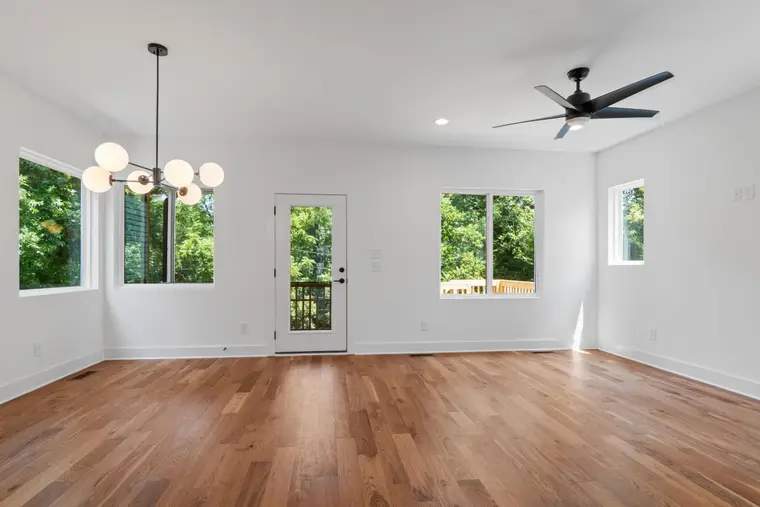
Hardwood installation
Solid and engineered hardwood installed over slab and pier-and-beam homes in Forney, Kaufman and Rockwall counties and the wider Dallas metro.
Learn more → -
Hardwood refinishing & sanding
Sanding and refinishing existing hardwood floors across Forney, Kaufman and Rockwall counties, starting with an honest read on whether yours can be saved.
Learn more → -
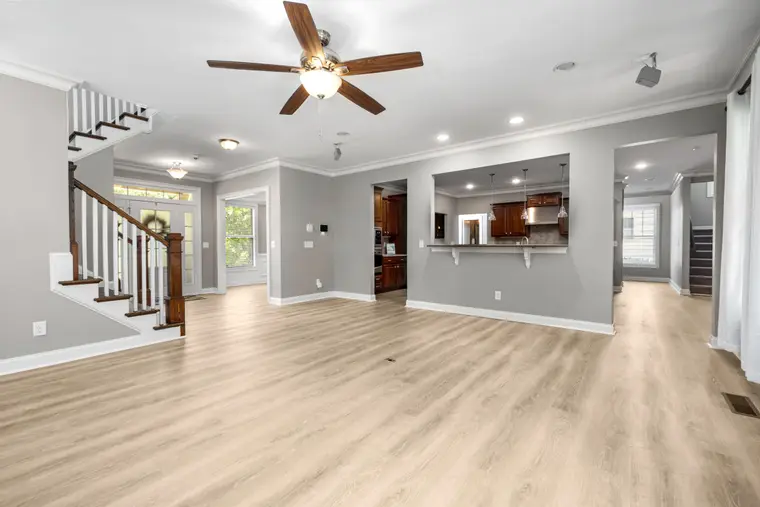
Luxury vinyl plank (LVP)
Luxury vinyl plank installed over slab in Forney, Rockwall and the Dallas metro, with the slab prep that keeps a floating floor tight and quiet.
Learn more → -

Laminate
Laminate flooring installed across Forney, Kaufman and Rockwall counties, with straight answers on AC ratings and the rooms it does not belong in.
Learn more → -
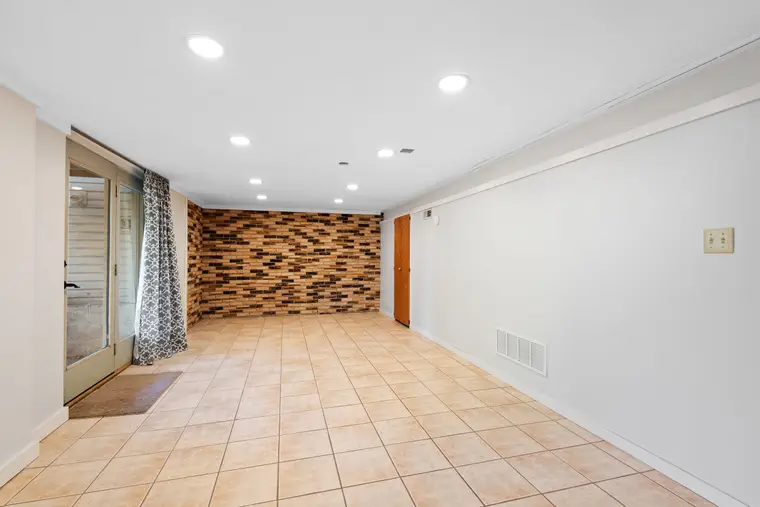
Tile
Porcelain, ceramic and natural stone tile set over properly prepped slabs in Forney and across the Dallas metro. Free in-home samples.
Learn more → -

Carpet
Carpet and pad for bedrooms, stairs and upstairs living areas, measured, seamed and power stretched throughout Forney and Kaufman County.
Learn more →
Ready for floors you'll actually love?
Free in-home estimate, clear pricing, and a crew that shows up when we say we will.