Hardwood refinishing & sanding
A tired hardwood floor is often a millimeter away from looking new. Sanding lifts off the old coating and a very thin layer of wood with it, and what comes back is the floor as it was laid, minus twenty years of scratches and gray traffic lanes. The part that takes judgment is knowing when there is not enough wood left above the tongue to do that, and saying so.
How to tell if your floor is worth saving
How much wood sits above the tongue
The whole question is how much wood sits above the tongue. On a three-quarter-inch solid board there is roughly a quarter inch of usable material up there, and a full sand takes only a fraction of a millimeter.
That math is why a solid floor can generally be taken back to bare wood four to six times across its life, longer than most people own the house. Floors in the older frame houses around downtown Forney have often been done twice already and still have room left.
What sanding fixes and what it will not
Refinishing fixes surface history: worn lanes down a hallway, chair scratches, a dull haze that no longer responds to cleaning, sun fading around a rug that moved, light cupping that has since flattened out.
It does not fix water that got under the boards and lifted them, damage in the subfloor, or urine that soaked into the plywood below. Those are repairs first, refinishing afterward. Where the damage sits in a handful of boards, we cut them out and weave replacements into the field so the repair does not read as a patch.
When replacement becomes the honest answer
The replacement conversation starts when there is no wood left to remove, when boards have cupped and dried into a permanent wave, or when what is down was never solid to begin with. That last one catches the most people.
What's included
- Wear layer measured before a machine touches the floor
- Screen-and-recoat where a full sand is not warranted
- Vacuum-containment sanding with sealed doorways and returns
- Stain samples applied to your own boards
- Board replacement woven into the field for water and pet damage
- Waterborne and oil-modified finishes, matte through semi-gloss
- Stay-off and rug timelines given in writing before we leave
Why some engineered floors cannot be sanded
Veneer thickness decides how many sands
Engineered flooring is a real wood surface over a plywood or fiber core, and that surface is measured in millimeters. Builder-grade and 1990s engineered product frequently ran a veneer under a millimeter thick, some barely half that. There is no sanding a floor like that. The drum reaches the glue line inside the first pass and nothing corrects it.
A veneer around two millimeters will take one careful light sanding. Three millimeters and up behaves much like solid wood and can be done two or three times.
Check the layers at a register or threshold
You can check before you commit. Pull a floor register and look at the cut edge of a plank in section, or lift a threshold at a doorway. The layers are visible: a top lamella with continuous grain, then the crossed plies under it. If that top layer looks like a sheet of paper against the rest of the plank, the answer is a recoat or a new floor rather than a sand.
Beveled edges and factory finishes surprise people
Two other things surprise people. Prefinished planks usually carry a small beveled edge at every joint, and flattening the floor removes it, so a floor that read as distinct boards comes back looking like one continuous surface. That should be a decision rather than a discovery.
Factory finishes are also cured with aluminum oxide, far harder than anything applied on site, so a prefinished floor grinds slowly, needs an aggressive first cut, and takes longer than a site-finished floor of the same size.
Dust, cure time and choosing a sheen
Containment is what makes dust manageable
Sanding makes dust, and anyone promising none is selling something. What is achievable is containment. The machines run on vacuum systems that capture the great majority of it at the drum, doorways get sealed with plastic and zippers, HVAC returns are taped off so the system does not carry fine dust through the house, and we vacuum between grits rather than at the end.
Expect a light film on high ledges afterward. That is an honest description of a very good job. The people running these machines have done it here the better part of twenty years, and none of it goes to a subcontractor.
When a screen-and-recoat beats a full sand
Not every floor needs the drum. A screen-and-recoat abrades the existing finish just enough for a new coat to bond: a one-day job that takes a worn but intact floor close to new.
It only works when the wear is in the finish and not in the wood, so anything scratched through to bare fiber, water-stained, or previously waxed or cleaned with an oil soap has to be sanded, because a new coat will not stick. A full sand runs coarse through fine grits, an edger against the walls, hand work in the corners, then buffing.
Waterborne cures faster, matte hides more
Stay-off times are dictated by the finish, not by the crew. Waterborne coatings take sock traffic within hours and furniture after about two days, but rugs stay off roughly two weeks so the film can finish curing and the boards can breathe. Oil-modified finishes are slower at every stage, hold an odor for several days, and keep ambering over the years.
Sheen is purely appearance. Matte hides scratches, dust and footprints and is what most households pick now, satin sits in the middle, and semi-gloss reflects everything including dog hair. Durability is identical.
What homeowners say
"All About Floors is amazing to work with! We recently had our entire flooring replaced and they not only did a wonderful job, the support and aftercare has been top notch! Highly recommend"
J Shoe2 · via Google "The team at All About Floors did an absolutely phenomenal job repairing a portion of a floor in my clients' home that nobody else would touch. We are so grateful for Patty and her amazing team!"
Carley Newlin · via Google
Hardwood refinishing & sanding questions
Can you refinish one room and leave the rest?
You can, but the seam will show. The same species from the same era darkens at a different rate depending on light, and a fresh finish beside a fifteen-year-old one reads as new against old no matter how the stain is matched. Where a room closes off with a door, we stop cleanly at a threshold. Across an open plan, do the whole field.
Do we have to move out?
Most families stay. With a waterborne finish the odor is mild and clears quickly, and we sequence the work so there is a path to a bedroom and a bathroom. Oil-modified finish is a different story: the smell is strong for several days, and households with infants or birds usually leave. Pets have to be out of the work area entirely, since paw prints in a curing finish are permanent.
Can we change the color of the floor?
Yes, within what the species allows. Red oak carries a pink undertone that fights gray stains, maple and birch blotch unless they are conditioned or water-popped first, and no stain makes a floor lighter than its own bare wood. We sand a section of your floor and lay candidate stains on it, because a sample board of someone else's oak tells you very little.
Will refinishing close the gaps between our boards?
No, and filling them in the wrong season creates a worse problem. Boards shrink through a dry heated winter and swell back through a humid Texas summer, so a gap packed tight in February gets squeezed out in July and leaves ridges. We judge gaps against the season we are working in, fill only what stays open year round, and the durable fix is steady indoor humidity.
There is a black stain where our dog used to sleep. Can you sand it out?
Usually not. Black marks mean urine reacted with tannin in the wood and traveled well below the depth any sander removes, often into the subfloor. Sanding lightens the halo and leaves the core of it. The honest fix is cutting those boards out, treating what is underneath, and weaving in replacements before the floor is sanded and finished as one surface.
Flexible financing available
Wisetack and Synchrony
Hardwood refinishing & sanding by city
- Rockwall Hardwood refinishing & sanding
- Forney Hardwood refinishing & sanding
- Fate Hardwood refinishing & sanding
- Terrell Hardwood refinishing & sanding
- Royse City Hardwood refinishing & sanding
- Heartland Hardwood refinishing & sanding
- Heath Hardwood refinishing & sanding
- Sunnyvale Hardwood refinishing & sanding
- Kaufman Hardwood refinishing & sanding
- Crandall Hardwood refinishing & sanding
- McLendon-Chisholm Hardwood refinishing & sanding
- Mabank Hardwood refinishing & sanding
- Talty Hardwood refinishing & sanding
- Combine Hardwood refinishing & sanding
- Kemp Hardwood refinishing & sanding
- Wills Point Hardwood refinishing & sanding
- Rowlett Hardwood refinishing & sanding
- Mesquite Hardwood refinishing & sanding
- Garland Hardwood refinishing & sanding
Other floors we install
-
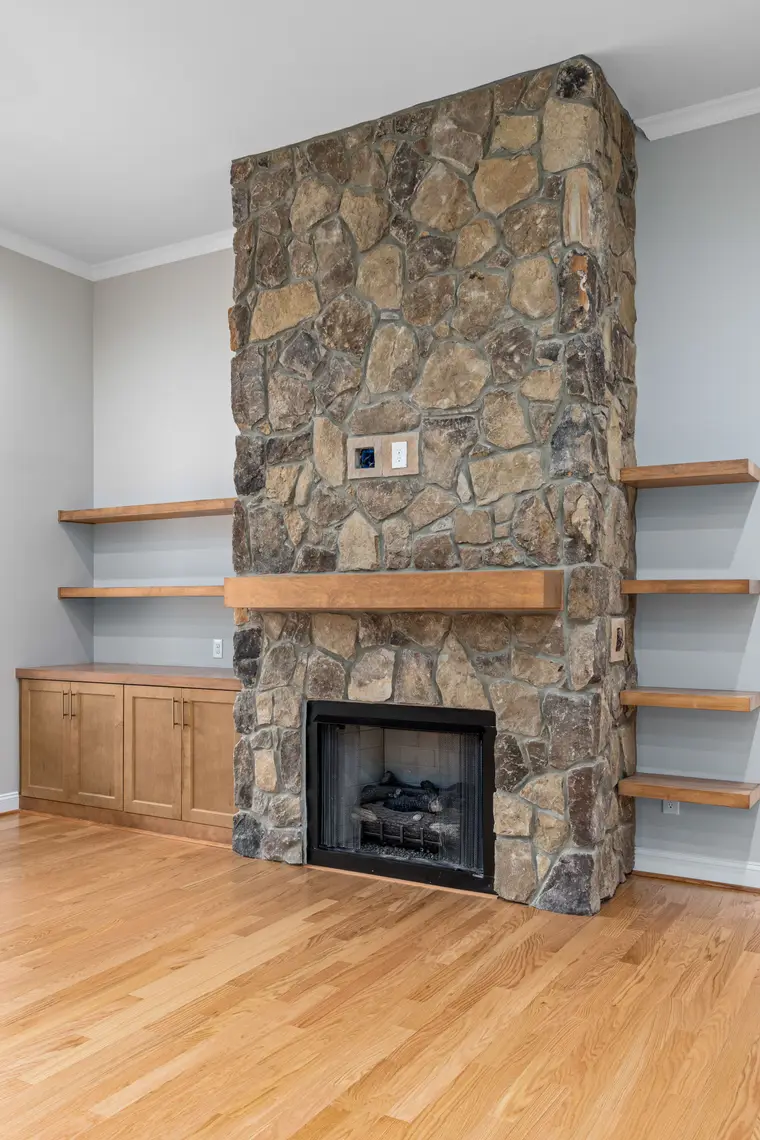
Hardwood installation
Solid and engineered hardwood installed over slab and pier-and-beam homes in Forney, Kaufman and Rockwall counties and the wider Dallas metro.
Learn more → -
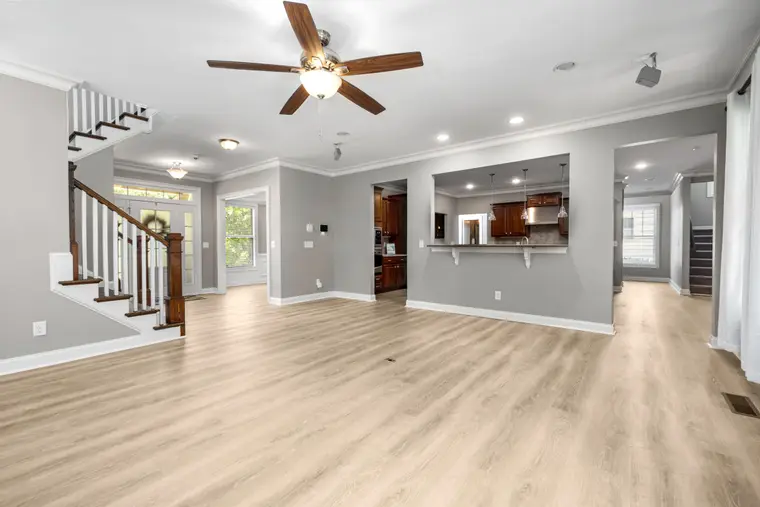
Luxury vinyl plank (LVP)
Luxury vinyl plank installed over slab in Forney, Rockwall and the Dallas metro, with the slab prep that keeps a floating floor tight and quiet.
Learn more → -
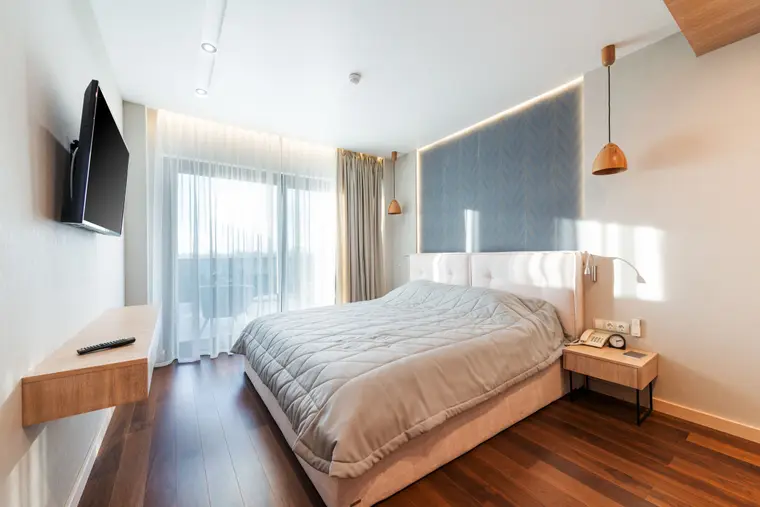
Laminate
Laminate flooring installed across Forney, Kaufman and Rockwall counties, with straight answers on AC ratings and the rooms it does not belong in.
Learn more → -
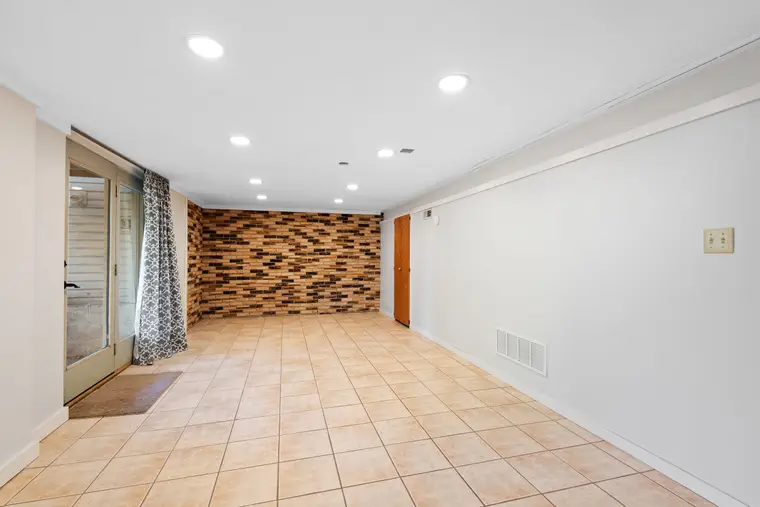
Tile
Porcelain, ceramic and natural stone tile set over properly prepped slabs in Forney and across the Dallas metro. Free in-home samples.
Learn more → -

Carpet
Carpet and pad for bedrooms, stairs and upstairs living areas, measured, seamed and power stretched throughout Forney and Kaufman County.
Learn more → -
Floor removal & demo
Tile, thinset, carpet and old vinyl removed and hauled off, and the slab ground flat, for homes across Forney, Kaufman and Rockwall counties.
Learn more →
Ready for floors you'll actually love?
Free in-home estimate, clear pricing, and a crew that shows up when we say we will.